What Is Incident Investigation and Why It Matters
Learn what incident investigation is, how it differs from reporting, and how it reduces repeat incidents.
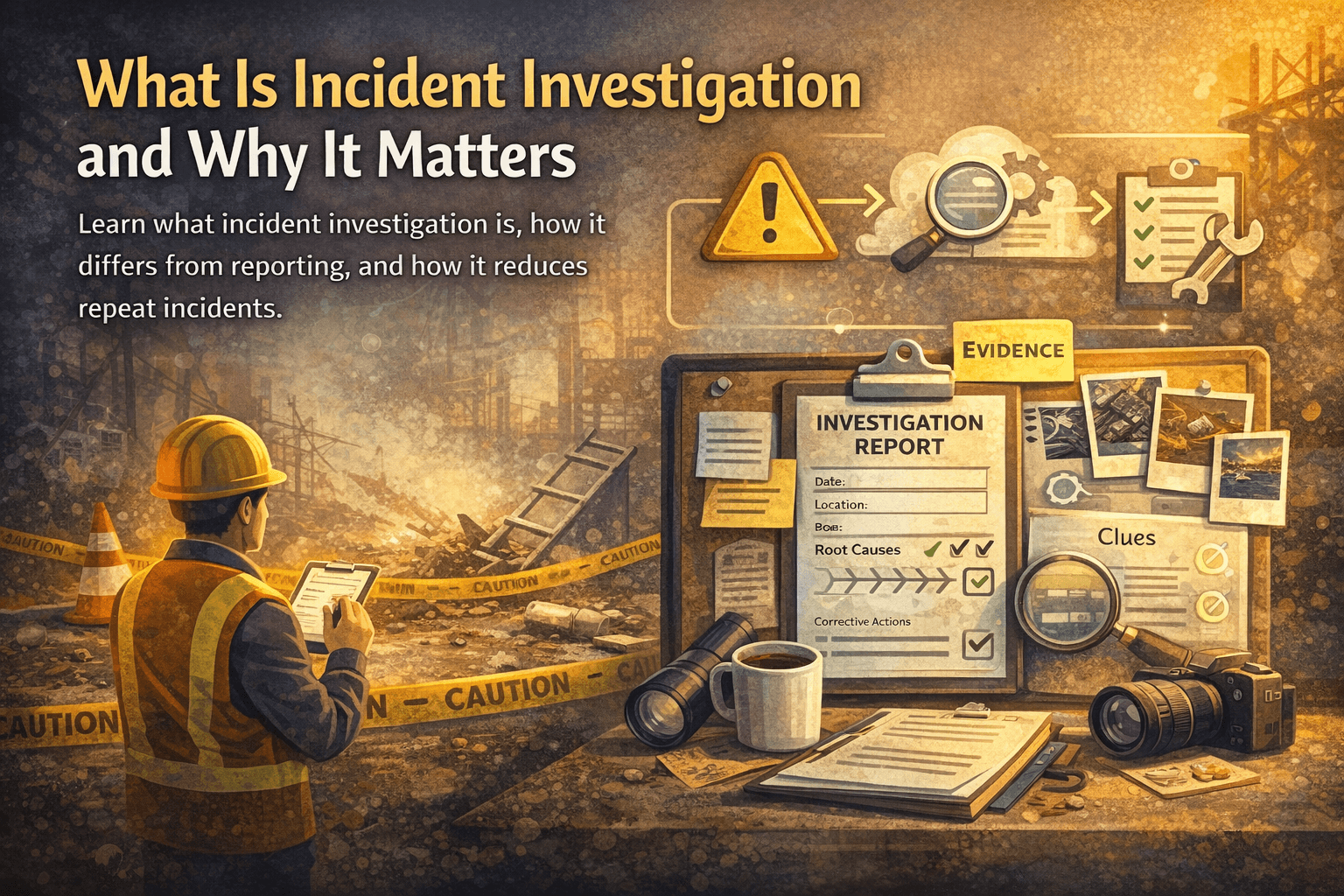
Move from submitted report to root-cause analysis and documented findings.
Incident investigation is the structured process of finding out why an incident happened so you can prevent it from happening again. It goes beyond reporting: reporting captures what occurred; investigation uncovers causes and drives corrective actions.
Incident reporting vs incident investigation
Reporting answers: What happened' When' Where' Who was involved' It produces a record of the event.
Investigation answers: Why did it happen' What factors (equipment, procedure, environment, behaviour) contributed' What should we change' It produces findings and action items.
Both are essential. Reporting without investigation leaves lessons unlearned; investigation without good reporting lacks reliable input.
Why investigate incidents'
- Prevent recurrence. Understanding root causes lets you fix underlying issues, not just symptoms.
- Comply with regulations. Many jurisdictions require investigations for certain types of incidents.
- Improve systems. Investigations often reveal gaps in training, procedures, or design that affect more than one person or site.
- Build trust. When people see that incidents lead to real changes, they're more likely to report and engage with safety.
Key steps in an incident investigation
- Secure the scene (if needed) and ensure people are safe.
- Gather evidence: interviews, photos, documents, data, soon after the event.
- Identify contributing factors using a method such as 5 Whys or fishbone diagrams.
- Determine root causes rather than stopping at immediate causes.
- Recommend corrective actions that address those causes and assign owners.
- Document and share findings (appropriately) and track actions to completion.
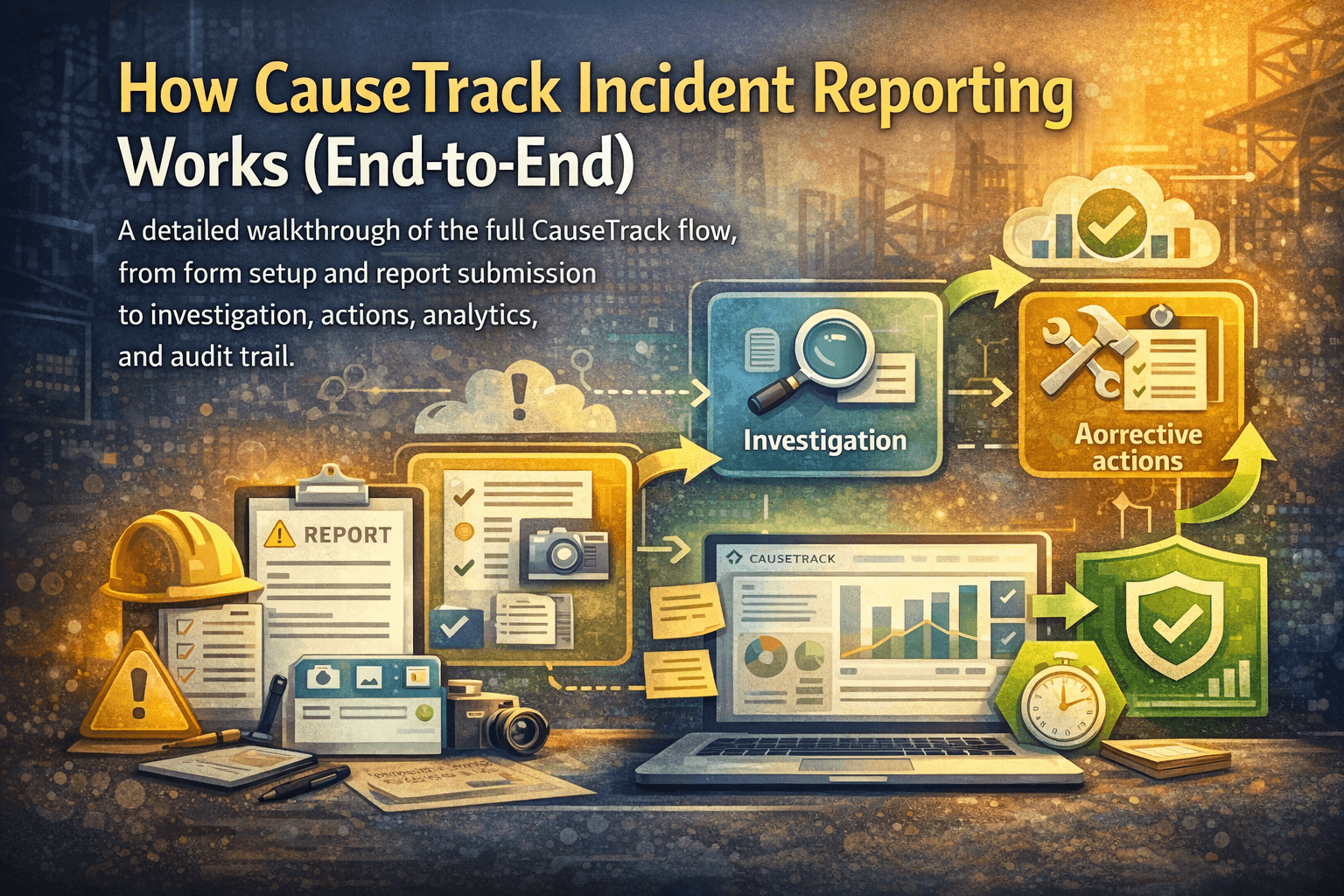
Using incident investigation software helps teams manage this process: assign investigators, store evidence, record findings, and link directly to corrective actions so nothing is lost.
Who should investigate'
Investigations are often led by someone with authority and training (e.g. a designated investigator or site manager). In some organisations, a small team conducts investigations. The important thing is that investigators are competent, impartial, and given time and support to do the job well.
Investigation is where incident reporting pays off. Invest in both clear reporting and thorough investigation to build a safer, more reliable operation.
Continue your evaluation
These next steps show how the investigation workflow connects to reporting, evidence, and corrective actions.
Incident investigation software
Review the investigation lifecycle, assigned ownership, and findings capture.
View pageIncident reporting software
See how investigations begin from structured reports and role-based routing.
View pagePricing
See which plans support investigation, audit history, and team workflows.
View pageRelated reading
View all posts
Turn reporting into a controlled workflow
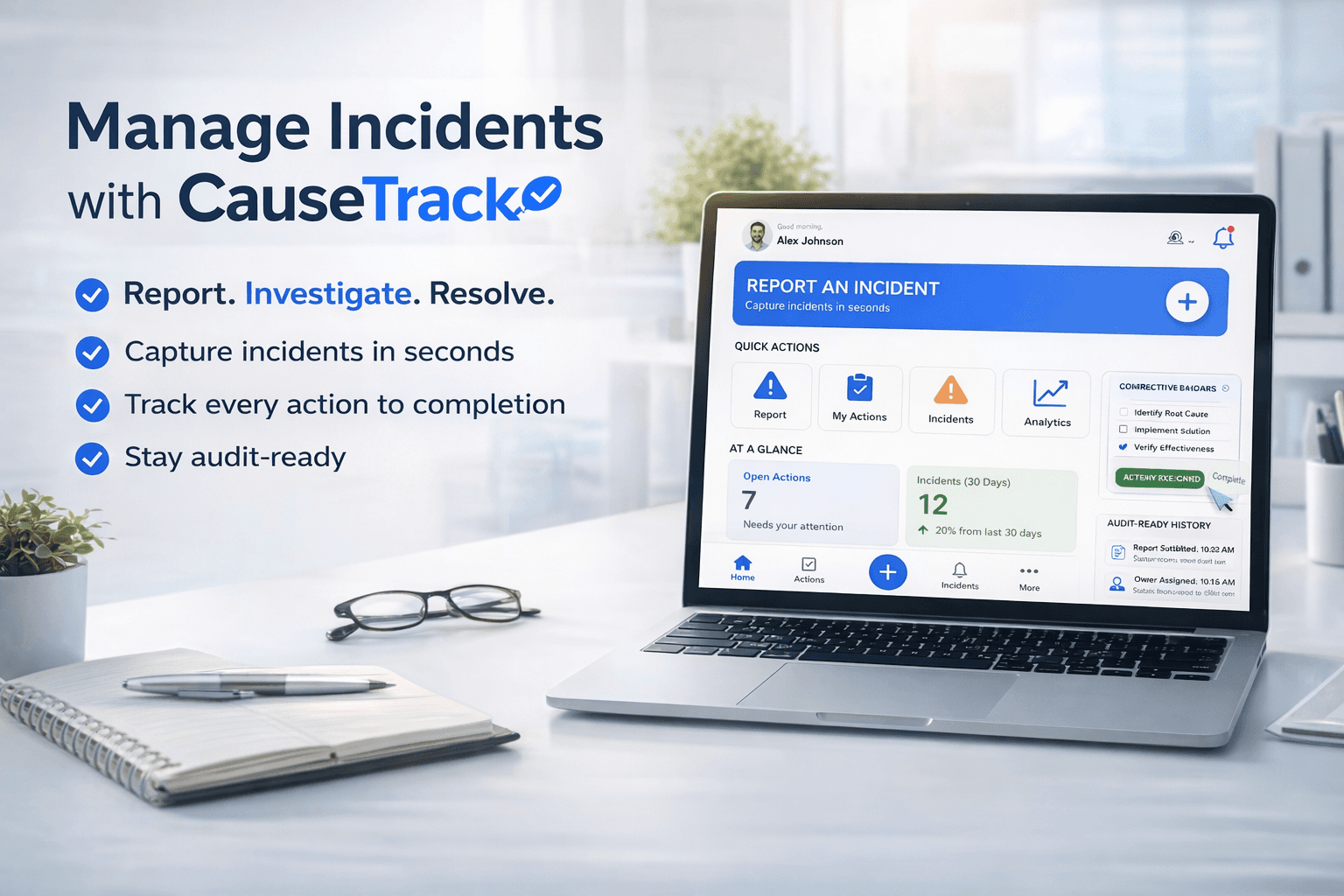
Use CauseTrack to capture incidents, run investigations, and track corrective actions in one place.