Workplace Safety Reporting: A Complete Guide
How to set up and maintain an effective workplace incident and safety reporting system.
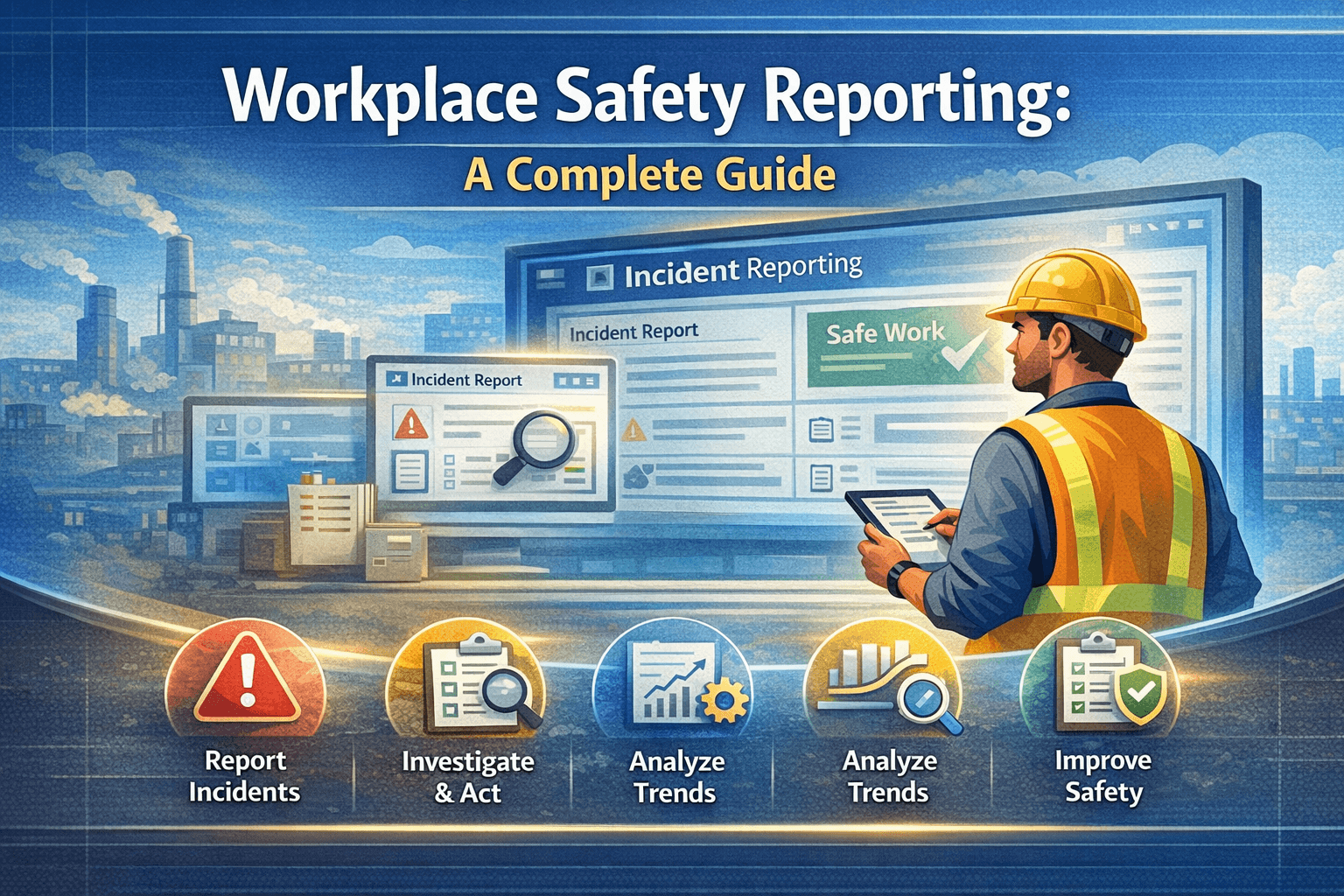
Run multi-site reporting, role-based review, and compliance-ready follow-through.
An effective workplace safety reporting system helps you spot hazards, learn from incidents, and meet legal and internal requirements. This guide walks through how to design and run one.
What is workplace safety reporting'
Workplace safety reporting is the process of capturing and handling information about incidents, near-misses, hazards, and other safety-related events. It usually includes a way to submit reports, a process to review and investigate them, and steps to take corrective action and prevent recurrence.
Benefits of a structured reporting system
- Fewer repeat incidents because causes are identified and addressed.
- Better compliance with OSHA, HSE, and other regulators who expect records and follow-up.
- Stronger safety culture when people see that their reports lead to change.
- Data for decisions on training, maintenance, and resource allocation.
Designing your reporting process
Define what to report. At minimum: injuries, near-misses, property damage, and hazards. Some organisations also track safety observations and positive behaviours.
Choose the right channel. Paper forms are still used in some settings, but digital workplace incident reporting is faster and easier to analyse. Use forms that are simple and available where work happens, including on mobile devices.
Assign roles. Decide who receives reports, who investigates, and who is responsible for closing out actions. Clear roles prevent reports from sitting unattended.
Set timelines. Define how quickly reports should be acknowledged, when investigations should start, and when actions are due. Timelines keep the process moving.
Using workplace incident reporting software
Dedicated software centralises reports, automates routing, and tracks status from submission to closure. Look for:
- Custom forms aligned to your sites and risks
- Notifications and assignments so the right people act quickly
- Links between reports, investigations, and corrective actions
- Dashboards and reports for trends and management visibility
- Audit trails for compliance and accountability
CauseTrack supports the full flow: report -> investigate -> action, with role-based access and configurable forms. Teams can submit from the field, and managers can see open items and trends at a glance.
Keeping the system healthy
- Promote reporting through training, reminders, and leadership messages.
- Review metrics regularly: reporting rates, investigation completion, action closure.
- Share outcomes (without naming individuals where inappropriate) so people see that reporting matters.
- Refine the process based on feedback and data so the system stays useful as your organisation grows.
A well-run workplace safety reporting system is one of the most effective ways to reduce incidents and build a culture of safety. Start with a clear process and a tool that supports it end to end.
Continue your evaluation
Use these pages if you are evaluating how CauseTrack supports safety operations beyond a single form or event record.
Safety management software
Explore the full operating model for reports, investigations, and actions.
View pageWorkplace incident reporting
See how reporting works for frontline teams, sites, and day-to-day operations.
View pagePricing
Check plan options for scaling safety workflows across teams and locations.
View pageRelated reading
View all posts
Turn reporting into a controlled workflow
Use CauseTrack to capture incidents, run investigations, and track corrective actions in one place.