Incident Reporting Best Practices for Safer Workplaces
Evidence-based practices to improve incident reporting rates, quality, and follow-through in your organisation.
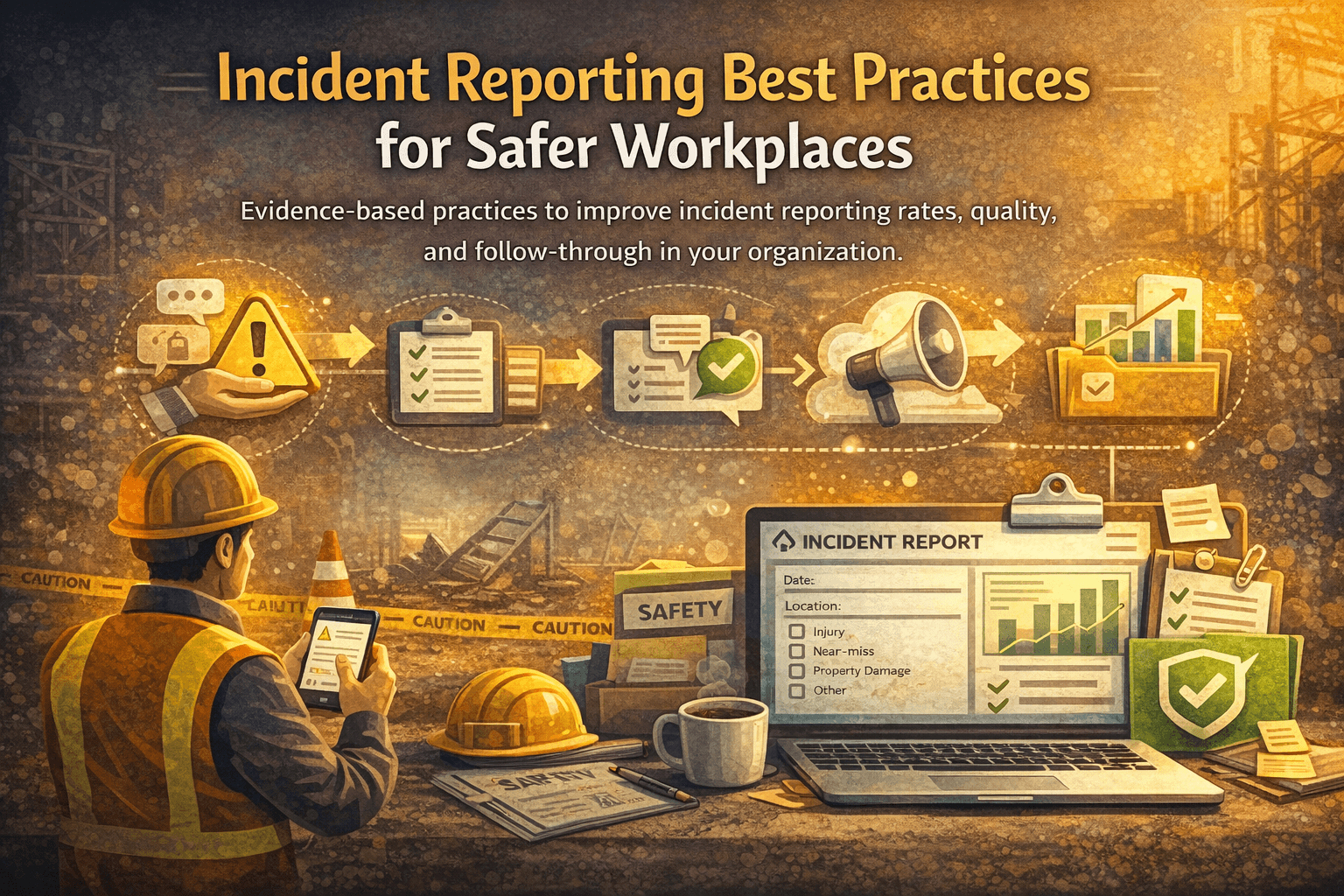
Capture incidents quickly, standardise report quality, and route work cleanly.
Strong incident reporting practices are a hallmark of mature safety management. When people report freely and reports are used to drive change, hazards get addressed before they cause harm. Here's how to build that culture and process.
Encourage reporting without fear
If people worry about blame or punishment, they won't report. Make it clear that the goal is to learn and improve, not to discipline. Support anonymous or confidential reporting where it helps, and thank people who report. Leadership should consistently reinforce that reporting is valued.
Simplify the process
The easier it is to report, the more reports you'll get. Use simple forms, mobile-friendly incident reporting software, and clear instructions. Reduce the number of required fields to the essentials so reporting takes minutes, not half an hour. Pre-fill site or area where possible.
Respond quickly and visibly
Acknowledge every report and communicate what will happen next. When actions are taken (for example, a hazard removed or a procedure updated), share that back to the team. Visible follow-through shows that reporting leads to change and encourages more reporting.
Use consistent categories and severity
Define categories (e.g. injury, near-miss, property damage) and severity levels so you can compare and prioritise. Standard categories make it easier to spot trends and allocate resources. Many safety management systems let you configure these and report on them.
Close the loop with investigation and actions
Reports should feed into investigation and corrective actions. Assign owners, set timelines, and track completion. Without this loop, reporting feels pointless. Use a platform that links reports to investigations and actions so nothing falls through the cracks.
Review and improve the system
Periodically review your incident reporting data: Are certain sites or types of incidents over-represented' Are reports getting stuck' Use the data to improve processes, training, and tooling. Incident reporting software with dashboards and filters makes this analysis straightforward.
Adopting these incident reporting best practices will improve both the quantity and quality of reports and help you build a proactive safety culture.
Continue your evaluation
Use this guide alongside the product pages that explain how CauseTrack handles reporting, routing, and field submission.
Incident reporting software
See the core reporting workflow, custom forms, and scoped visibility.
View pageWorkplace incident reporting
Understand how frontline teams report incidents from sites and operations.
View pagePricing
Compare plans for incident reporting, investigations, and audit-ready workflows.
View pageRelated reading
View all posts
Turn reporting into a controlled workflow
Use CauseTrack to capture incidents, run investigations, and track corrective actions in one place.